

|




|




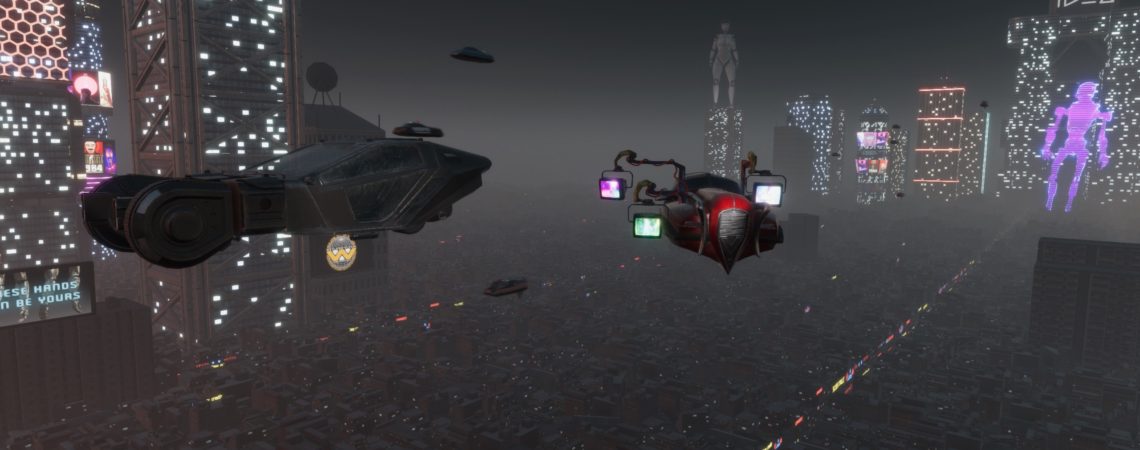
Next-Generation ITMF Streaming Demo Recap
In May, IDEA conducted a live demonstration of the latest advance in 3D streaming, showing a greatly advanced architecture and pipeline developed by engineers from IDEA members Charter Communications, OTOY, and CableLabs.
In the demo, hundreds of 3D objects were streamed in a complete 3D scene, creating a seamless 3D experience for the viewer. Now, the viewer will be able to watch and interact with longer-form 3D content on multiple immersive displays.
Both Unreal and Unity game engines were employed as clients. This is significant since over 90% of developers and content providers for immersive displays are using these game engines to create content, making this is a major step toward bringing 3D streaming to a wider audience.
For a more detailed description of the demo and its significance, see the article in the last issue of this newsletter here:
https://www.immersivealliance.org/2022/04/06/march-newsletter-2022/.
Posted July 22, 2022

Industry News
What Caught Our Eye
Is it just me, or does it seem like news about holograms, metaverses, 3D immersion, and the like is just everywhere? From medical breakthroughs to education, politics, sports, and even the art world, things happened in the past few months that pushed the use of technology a bit further. Truly exciting times.
Here’s a quick rundown of some of the stories out there.
Medical
In “Why Medical Holography Is Rapidly Gaining Ground,” the author explains: “Holographic 3D technology renders medical professionals with advanced diagnostic capabilities and surgical planning by allowing them to slice virtual tissue, organs, and other body parts at various angles. Holomedicine advances access to percutaneous procedures without invasive needle techniques. Surgeons across the world are now curious to explore medical holograms to enhance the efficiency of complex surgeries.” Read more in BioSpectrum here.
Other medical stories include “Dr. Hologram: London Surgeon Pioneers Shoulder-Replacement Technique” in The London Free Press here, and this YouTube video discusses an augmented clinical experience using 10G technology to deliver the best breast cancer care everywhere so underserved communities can get state-of-the-art treatments. Verified Market Research recently published their report “Medical Holography Market Size worth $10.7 Billion, Globally, by 2028.”
Space Exploration
The medical use of holographic technology is also taking doctors to space. Read about a “Houston Company Using Holographic Tech to Beam Doctors Into Space.”
Hospitality
Proto Inc. (formerly PORTL) is the world’s first two-way, interactive holographic communications platform available to hospitality businesses, designed to be used for speeches, event appearances, trade show booth displays, and much more. Read “Hotel and Convention Center Communications With Worldwide Holographic Technology” on HospitalityNet.
Education
Yet another medical application is taking place in the world of education with “The University of Kansas School of Nursing Immersive Education Technology Solution.” View on YouTube.
The University of South Florida addresses the age-old problem of needing to be in two places at once. Read “Two Places at Once? USF Leader-Turned Hologram Proves It’s Possible.”
Politics
The headline says it all in the France24 article: “France’s Mélenchon Looks to Magic Up More Leftist Votes With Hologram Campaign Rallies.”
Sports/Entertainment
Cricket is big in India, so when telco giant Airtel wanted to demo new tech, what better way than to recreate the 1983 Cricket World Cup? “From Immersive Video to Holograms: What Will the 5G Experience Be Like?”
Art World
Nothing seems to titillate more than a mysterious Leonardo painting that very few people have actually seen. Holography tech brings it alive, but is it real? Read these two stories to get to the bottom of the mystery: “Holo: A 3D Hologram Inside a Crystal Box, Sold Via Smart Contract” in Be[in]crypo and “NFT Twist Is Latest Development in Saga of Contested ‘Leonardo’ Painting Hidden in a Swiss Vault” in The Art Newspaper.
Business
The Harvard Business Review weighs in on “How the Metaverse Could Change Work.”
Books
Something to add to your reading list: Venture capitalist Matthew Ball just published (as of July 19) “The Metaverse: How It Will Revolutionize Everything.” Read The Guardian’s Q&A with the author here: “Exit the Internet, Enter the Metaverse – Your Online Future Is in 3D.” Available on Amazon here.
Advances in Science
Prehistoric creature inspires new camera tech. Based on the optical structure of the eye of a Cambrian-era trilobite, the “New Light Field Camera Can Focus Up-Close and Far Away Simultaneously” with unlimited depth of field.
Posted July 22, 2022

IDEA Members Selected to Showcase New Technology at Cable-Tec EXPO 22
Several active members from the IDEA team will be showcasing their recent work on 3D Streaming at the SCTE Cable-Tec Expo Fall Technical Forum to be held this September in Philadelphia.
Austin Pahl, software engineer at CableLabs, will give an in-depth presentation on motivations and algorithms behind 3D Streaming. In addition to attending the presentation, expo registrants will have access to a more detailed technical paper on the same subject.
Recognizing the steady rise of diverse forms of immersive media, IDEA has designed a novel architecture, dubbed “3D Streaming,” for delivering immersive content to end displays with a simple, uniform methodology regardless of the display type. With the ongoing growth of immersive media, particularly augmented reality (AR), virtual reality (VR), and light field displays, and the rapidly increasing data throughput requirements needed by these devices, IDEA believes it is more important than ever to build an architecture that streamlines distribution workflows.
Those interested can register for SCTE Cable-Tec Expo here: https://expo.scte.org/attendee-registration/.
To see a demonstration of 3D Streaming in action, check out IDEA’s webinar, which aired in May this year: https://www.immersivealliance.org/videos/.
Posted July 22, 2022
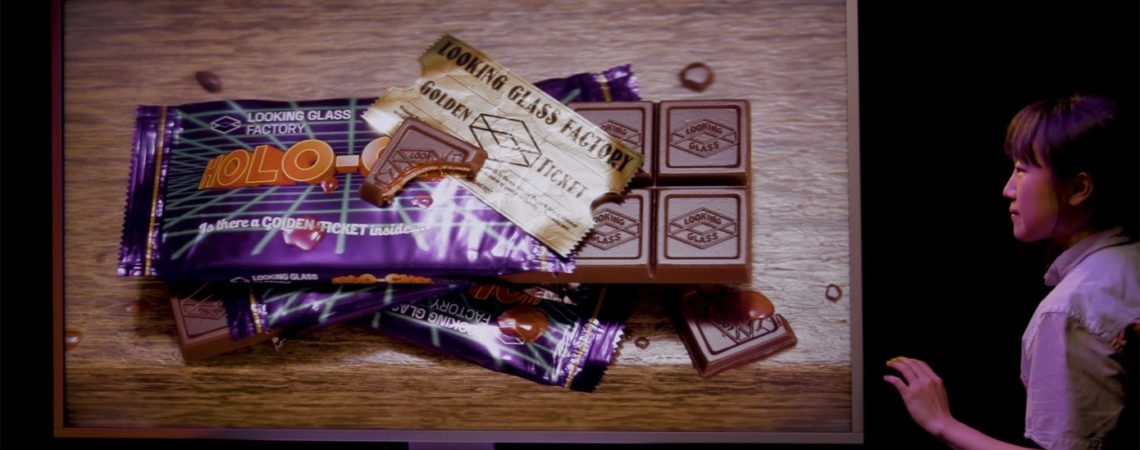
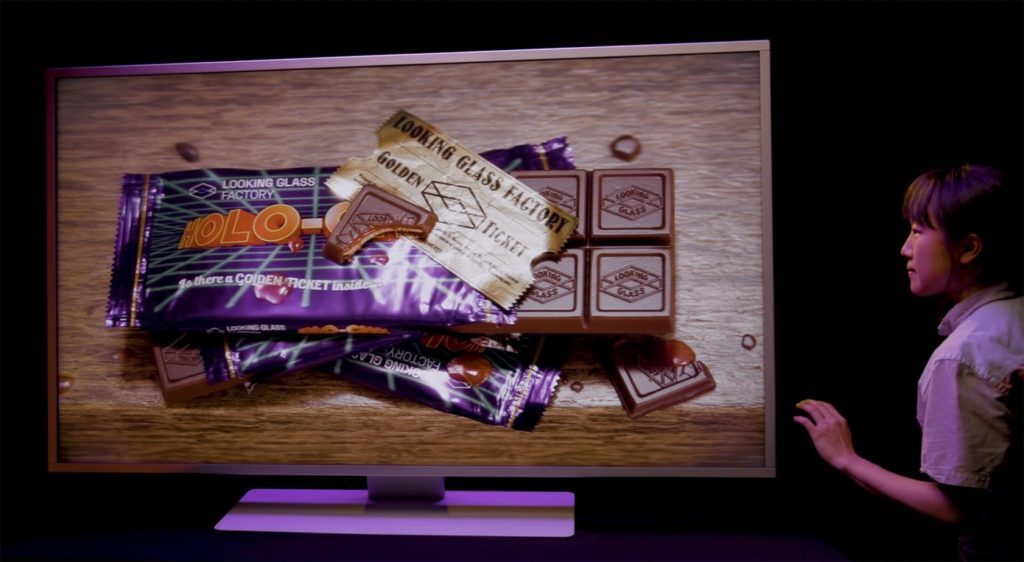
“Golden Ticket” by Jay Howse
At 65 Inches and 8K, This May Be the World’s Largest 3D Immersive Display
Perhaps the biggest news in the world of immersive imaging in recent months is the impressively large holographic display announced by IDEA member company Looking Glass Factory. The Looking Glass 65” is the largest, highest-resolution display of its type ever commercially introduced, at 65 inches with 8K resolution. To put it into perspective, the display is five times larger than typical 3D displays, and 50 times larger than other group-viewable 3D display currently available on the market.
At this size, the display is intended for viewing by as many as 50 people at once. Generation of up to 100 different perspectives of 3D content from 100 million points of light every 60th of a second means everything shown on the Looking Glass 65” feels perceptually real.
Prototypes of this new display are already in use by entertainment companies for both storytelling and marketing. For instance, Springbok Entertainment recently premiered its new film, “Zanzibar: Trouble in Paradise,” on the 65-inch display at Tribeca 2022. This groundbreaking production is not only the first holographic film or documentary on a Looking Glass display but also the first-ever holographic film or documentary in competition at the Tribeca Festival.
“The massive increase in the size promises 3D storytellers the ideal canvas to push the boundaries of immersive experiences,” says Brandon Zamel, CEO at Springbok Entertainment. “This display solidifies the mainstream opportunities and applications of the immersive medium, effectively providing a missing piece of the puzzle for the industry that, in turn, will accelerate its entire growth.”
Looking Glass CEO Shawn Frayne puts the significance of this news into more perspective, saying, “This is only the beginning. Similar to the shift from photographs to film, radio to television, and black & white to color over the past century, the Looking Glass 65” will usher in one of the monumental shifts in how media is consumed, from flat 2D media to deeply 3D. No headset or 3D glasses required.”
The announcement generated extensive coverage in the news media last month. Here are a just a couple of the stories:
- Forbes: https://www.forbes.com/sites/michellegreenwald/2022/06/29/will-holograms-be-the-next-big-media-format-theyre-not-the-holograms-you-remember/?sh=86a633731c4a
- Crunchbase: https://techcrunch.com/2022/06/07/looking-glass-factory-large-holographic-display/
Posted July 22, 2022
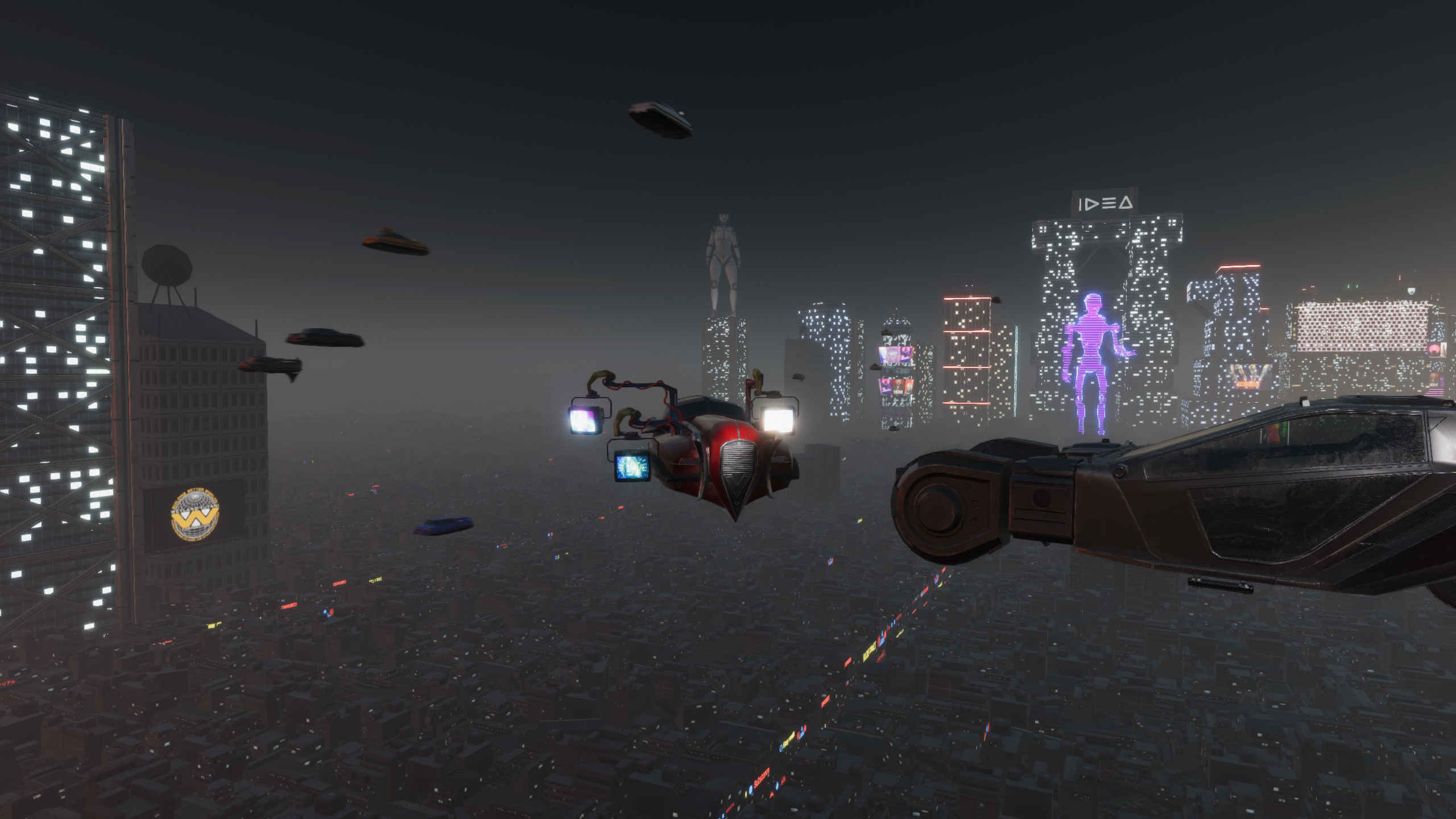
|


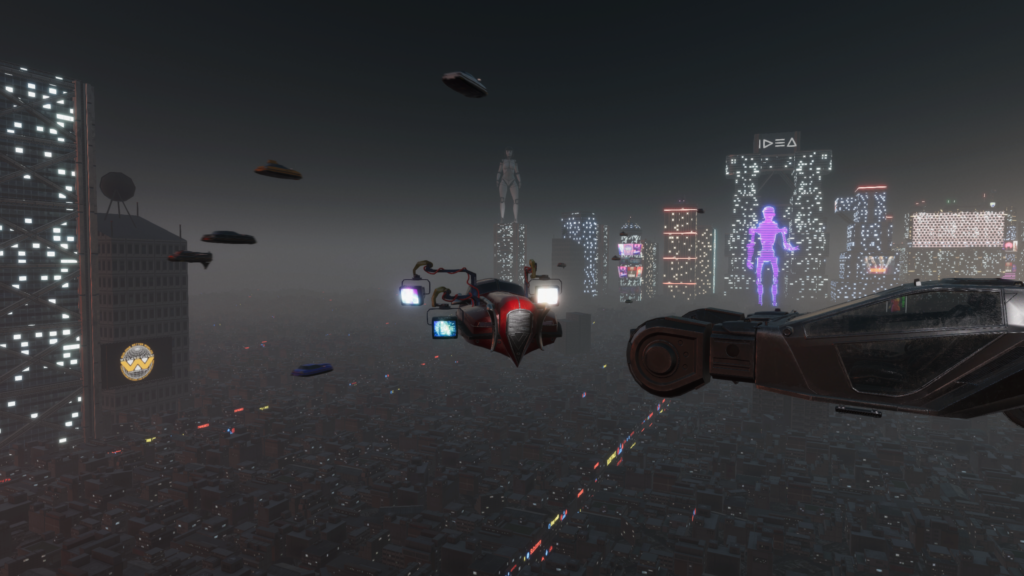
The new demo, which takes place May 4th, 2022, will involve the streaming of hundreds of 3D objects in a complete 3D scene, creating a seamless 3D experience for the viewer. Now, the viewer will be able to watch and interact with longer form 3D content on multiple immersive displays.
For this demo, we will employ both Unreal and Unity game engines as clients. Over 90% of developers and content providers creating content for immersive displays are using these game engines to create content, so this is a major step towards bringing 3D streaming to a wider audience. The use of Unreal and Unity runtimes paves the way for targeting current and future light field based holographic displays such as the recently announced SolidLight display from IDEA founding member Light Field Lab.




IDEA finishes 2021 with Exciting ProgressPete Ludé, Chairman |
|
Each year end provides an opportunity for stepping back to review the past 12-months. As it has for everyone, the past 12 months has certainly presented an unusual set of circumstances for the IDEA team, but the outcome has been some exciting progress. Let’s pause for a moment to review: • The posting of eight IDEA mini lectures started off the year. The lectures are on different aspects of the Immersive Ecosystem from the SMPTE Annual Technical conference. The recordings have enjoyed steady traffic, and you can still enjoy the full series on the video resource page on our website. • This May, we published the first edition of an important white paper on Photographic Live Action Capture for Immersive Media. This report summarizes over a year of study by our Live Action Working Group and sets a useful foundation for understanding the requirements of encoding objects and scenes that are captured through photographic, Lidar or other means. • In July, the Media Format Working Group completed updates to the ITMF (Immersive Technology Media Format) Container Specification and made this publicly available as version 1.1. The Media Format Working Group is working on the next version of the full ITMF suite of specifications. |
|
• In early October, our IDEA Network Architecture Working Group was able to produce our first live demonstration of streaming immersive content using ITMF over an edge network. This is a technical demonstration and tutorial that – in normal times – would have been a vibrant in-person gathering at one of the popular industry conferences. Given that these are far from “normal” times, IDEA produced this milestone demonstration as a live webcast. The good news is that because of that, the demo is available online now, in case you missed it. • In conjunction with our streaming demo, IDEA released libitmf – our first step towards a completely open reference implementation of the complete ITMF specification suite. Information about this open-source downloadable reference software is available. • Our Working Groups have also been busy mapping out our Roadmap for 2022, with more notable developments in the works. • In addition to the hard work within IDEA, it was exciting to see major product introductions of light field and holographic displays during 2021 from Member companies Light Field Labs and Looking Glass Factory. Significant new innovations were also released by IDEA Member OTOY relating to ITMF rendering. • Last but not least, following the formalization of our liaison agreement with the MPEG group, our IDEA team has been collaborating on defining and documenting requirements and future standards for the interchange and distribution of immersive media. We look forward to continuing joint efforts with MPEG throughout 2022. The constraints on travel and in-person meetings this year have certainly changed the ways in which we all communicate. Given the different times we find ourselves in, it was particularly gratifying to reflect on the remarkable progress made during 2021. Two things have become much more in focus – at least for me – during this past 12 months. First, the marketplace has clearly begun to embrace the future of immersive content on light field and advanced holographic displays. As these products become commercialized, and content creators realize the opportunities to extend their story- telling, there is a notable uptick in interest, research, and the exchange of ideas. Secondly, we still have a lot of work to do. If you are not already an IDEA member, now is a good time to step into the action, as IDEA accelerates our work to enable a truly immersive future. From all of us at IDEA, we wish you, your family and friends a joyous and relaxing holiday season. |
Did you miss our October Virtual Event or maybe want to see the presentations again? Our event Streaming Immersive Content: Demonstration of ITMF over an Edge Network is now available on YouTube. Check it out.