
Immersive Alliance
  • HOME
  • ABOUT
    • Overview
    • FAQ
      • About IDEA
      • Immersive Media
      • What is a light field?
      • IDEA Specifications
      • Becoming a Member
    • Leadership
    • Members
  • JOIN
  • NEWS
    • In The News
    • Press Releases
    • Events
      • ITMF 3D Streaming Demo Webinar
  • RESOURCES
    • White Papers
      • Download: Photographic Live Action Capture for Immersive Media
      • Download: An Overview of Scene Description Formats
    • Presentations
    • Videos
  • ITMF
    • ITMF Spec
    • Roadmap
    • ITMF Reference Software: libitmf
  • BLOG
  • CONTACT
  • HOME
  • ABOUT
    • Overview
    • FAQ
      • About IDEA
      • Immersive Media
      • What is a light field?
      • IDEA Specifications
      • Becoming a Member
    • Leadership
    • Members
  • JOIN
  • NEWS
    • In The News
    • Press Releases
    • Events
      • ITMF 3D Streaming Demo Webinar
  • RESOURCES
    • White Papers
      • Download: Photographic Live Action Capture for Immersive Media
      • Download: An Overview of Scene Description Formats
    • Presentations
    • Videos
  • ITMF
    • ITMF Spec
    • Roadmap
    • ITMF Reference Software: libitmf
  • BLOG
  • CONTACT

News

Link Enlarge

IDEA Interactive Webcast | OCT. 6, 2021

Jessy George September 17, 2021 Events, Featured, IDEA @ Events, News 0

Streaming Immersive Content:
Demonstration of ITMF over an Edge Network

Wednesday, October 6, 2021
10:00am – 11:00am  PDT
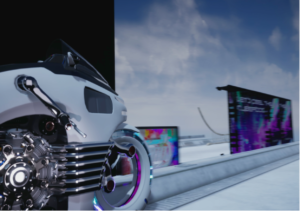
The Immersive Digital Experiences Alliance (IDEA) has been hard at work expanding the Immersive Technology Media Format (ITMF), a suite of royalty-free specifications that establishes a baseline for an interchange of immersive media.

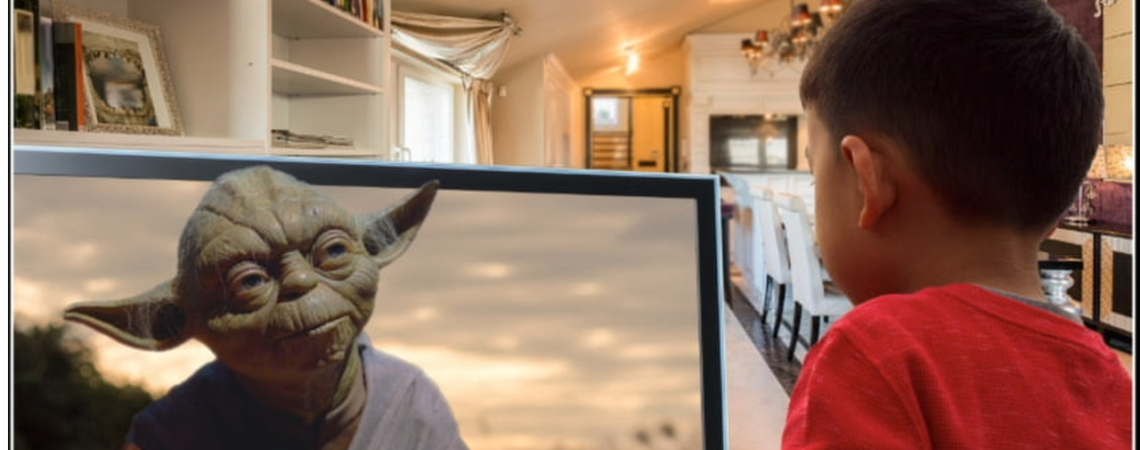
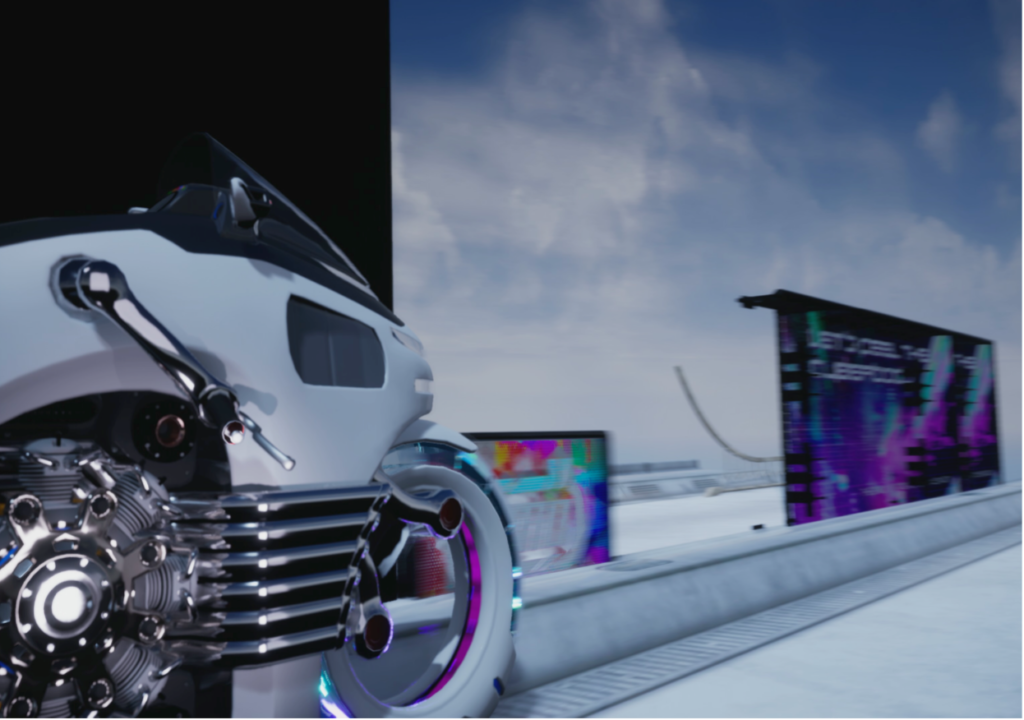
To further explore and validate the functionality of ITMF, the IDEA team will be demonstrating streaming of holographic content encoded in ITMF format, through an orchestrated edge network. The end-to-end proof-of-concept exercise will showcase real-time rendering using Unreal Engine coupled with a holographic display. The demonstration will be accompanied by an explanation of the technology being deployed, and a question-and-answer session.

The demonstration will be presented through an interactive webcast. Attendance is free but requires pre-registration. Registration now open.
Register Here

Demonstration of ITMF over an Edge Network | Meet our Speakers

Jessy George September 1, 2021 Events, Featured, News 0

Streaming Immersive Content:
Demonstration of ITMF over an Edge Network

Wednesday, October 6, 2021
10:00am – 11:00am  PDT


Meet Our Speakers


Next week is almost here! No pre-recorded presentations here. Meet our speakers from OTOY, Mission Rock Digital, Charter Communications and CableLabs. You will have the opportunity to ask and get your questions answered live.

Attendance is free but requires pre-registration. Registration now open.

Register Here: Tickets here

Thomas Alder | Software Engineer , OTOY

Thomas Alder is a software engineer at OTOY and a recent BS Computer Science graduate from the School of Engineering at the University of Colorado – Boulder. He  and has been involved in IDEA for over a year working on the ITMF specifications, demonstrating the first ITMF demonstration during the 2019 Light Field and Holographic Display Summit at CableLabs, and participating within the working groups.

Pete Ludé, IDEA Chairman | CTO, Mission Rock Digital

Pete Ludé is a prominent engineering leader in advanced imaging and sound.  He currently serves at CTO of Mission Rock Digital, a San Francisco-based engineering firm specializing in next-generation media.  Current work includes display technology for next-generation cinema, immersive sound, and interchange pipelines for VR, AR and plenoptic (light field) imaging systems.

Dhananjay (“DJ”) Lal, IDEA Board Member |Senior Director, Charter Communications


As Senior Director in the Emerging Technologies team, DJ Lal leads the Immersive Media Practice at Charter Communications. In this role, he provides strategic leadership and direction on service delivery innovation over the network for Gaming, Augmented Reality and Virtual Reality


Austin Pahl, CableLabs

Austin Pahl is an Associate Software Engineer in Tech Policy at CableLabs and a contributing engineer at the Immersive Digital Experiences Alliance, where he contributes to immersive content production and specification development. He has a B.S. in Computer Science from the University of South Carolina and is finishing his M.S. in Computer Science at the University of Colorado Boulder. He co-leads the development of libitmf with Thomas Alder.


Dell Wolfensparger | XR Architect, Charter Communications

Dell is an XR Architect for Charter Communications: Emerging Technologies.  He has played a lead role in VR, AR, and mobile application development for major brands: Disney, Microsoft, Thomas The Train, Penn State University and many more. His first foray into Virtual Reality was a 3D based virtual museum of Science Fiction, Fantasy and Horror for Forest Ackerman at Marlin Software where he was the technical and creative director. Since then he has been deeply involved in XR based enterprise and consumer products using Microsoft Hololens, AR devices, ​VR HMD’s and Holographic displays from Looking Glass Factory.

Link Enlarge

IDEA Newsletter | New Whitepaper

Amy Gaylord June 1, 2021 Featured, News 0

New Whitepaper

Live Action Capture for Immersive Media

IDEA Live Action Working Group is proud to announce the release of a new white paper on Photographic Live Action Capture for Immersive Media. The Working Group has been meeting regularly over the past eight months to research and investigate this important aspect of immersive content creation and to document its initial findings. The White paper is now available for download on www.immersivealliance.org/ Download Whitepaper Here

Live scenes are currently being captured through a variety of volumetric camera system, multi-camera arrays, light stages and through the use of computational processing of monocular and stereoscopic camera systems. These source files may be encoded in several different and novel ways, some of which have only recently been described in research literature. This IDEA report explores the various data formats and capture methodologies that are in use or proposed for live action capture, then assesses potential benefits and shortcomings of each. The eventual goal of this IDEA Working Group is to make specific recommendations and evaluations with considerations including device independence, storage, delivery, interoperability with other formats and eventually standardization.

Please download and review this new study from the IDEA web site today. We welcome feedback and questions on the white paper. Contact us at Comments@ImmersiveAlliance.org

meeting

IDEA Annual Strategy Meeting

Each year, members of the Immersive Digital Experiences Alliance (IDEA) convene to hear Progress Reports from each of the active Working Groups, and to participate in an open format to discuss strategic goals and priorities, asses market developments and lay the foundation for the next year’s work. Our working groups currently include the Media Format WG, Live Capture WG and Network Architecture WG – each of which has made significant progress over the past 12 months.

As with most meetings so far in 2021, our IDEA Annual Strategy Meeting will be held by virtually. It is coming up on May 18 and 19. If you’re already an IDEA member, we look forward to seeing you there. If you have been thinking about joining – now is the perfect time. Please read more at https://www.immersivealliance.org/join/ and contact us about signing up. There is still time to become a member and participate in this very productive and important annual event.

NFTs and ITMF

Non-Fungible Tokens are gaining popularity to manage digital content ownership – and IDEA’s Immersive Technology Media Format (ITMF) may be a key to enabling them.

Ownership of Digital Collectibles

With the future edging closer to volumetric and lightfield displays, a new dimension of digital art is soon to be unlocked. Advances in digital content creation (DCC) software and display hardware are enabling new art forms and possibilities of visual entertainment. However, there remains a question mark around the ownership of such forms of media. The answer lies on the blockchain.

The blockchain is an immutable, trustable, decentralized and distributed ledger allowing anyone the ability to query records (blocks). As a transaction occurs, a new block containing a cryptographic hash as a reference to the previous record and a timestamp is linked creating a chain. Read full article

Coming Up: ITMF Immersive Streaming Demo

The IDEA Network Architecture Working Group has been working diligently in preparation of a proof-of-concept demo of streaming media distribution using IDEA’s Immersive Technology Media Forma (ITMF). The lab demonstration, planned for September and presented virtually by webinar, is intended to showcase the streaming of 3D content over a network using a media-aware network protocol. The goals of this demo also include the use of split rendering functionality and an implementation of a network platform orchestrator to manage scene graphs and other file types. The details of this platform are now being finalized. The demo will be accompanied by a tutorial explaining the complete architecture of the work being conducted, as well as future work planned.<-

A new software reference toolset – itmflib – is also being introduced. This C++ reference code enables reading and writing of assets and metadata in ITMF container files through C++ and JavaScript programming interfaces based on the ITMF Container Specification. Please join the IDEA Mailing List to stay informed about the plans, and how you can participate in this important tech demo.

IDEA Establishes Liaison Relationship with MPEG

The Immersive Digital Experiences Alliance (IDEA) is proud to have established a “Type C” Liaison relationship with MPEG – the Motion Picture Experts Group – the internationally renowned alliance of working groups of ISO and IEC. The Liaison was affirmed by Joint Technical Committee 1 (JTC 1) at the April quarterly plenary meetings, and will be soon registered officially by ISO, the International Organization for Standardization.

This relationship opens up improved communication paths between the IDEA Working Groups, and MPEG Working Group 2 on MPEG Technical Requirements. MPEG members have significant experience in media encoding, including recent work in the MPEG-I Immersive standards. The IDEA team is looking forward to even stronger collaboration with MPEG in the understanding of industry needs for future media formats.

Link Enlarge

ITMF Road Map

Jessy George March 29, 2021 Featured, News 0

IDEA has been hard at work creating documents and reference materials to put out and we now have an ITMF Road Map available for download with the ITMF Spec. Check it out.

Link Enlarge

IDEA Newsletter | A Memorable Year

Jessy George December 21, 2020 Featured, News 0

A Memorable Year
Pete Ludé,  IDEA Chairperson

During the 2019 Holiday break, it would have been impossible to predict the monumental changes we all experienced during 2020.  On behalf of the IDEA team, we hope that you and your friends and family are navigating these challenging times and are ready for a road to normalcy (whatever that is) during 2021.  Despite the pandemic, there has been remarkable progress in the evolution of Immersive Media technology during the year, and IDEA is immensely proud to have been a part of it. Reflecting on the past twelve months, here are some of the highlights. First, we are proud to have nearly doubled our membership during the year.  We’re honored to welcome new members:

  • Gridraster – a start-up providing the underlying compute and network stack to power immersive mixed-reality experiences on mobile platforms
  • Looking Glass Factory– committed to building a headset-free, hologram-powered future.
  • Pluto VR – whose is helping humanity transcend physical location, and
  • Volumetric Camera Systems — a multi-camera solutions and production studio focused on providing next-generation immersive services for film, TV and beyond.

These remarkable innovators join existing members CableLabs, Charter Communications, Cox Communications, Light Field Lab, OTOY and Visby to round out a team of multi-disciplinary experts collaborating to invent the future immersive ecosystem.

Secondly, IDEA formed a new Working Group on immersive digital representation of live-captured images, acknowledging the potential differences between encoding photographically captured vs. computer generated holographic and light field content. In another milestone this year, IDEA member Charter Communications produced a remarkable demo at the October SCTE-ISBE Cable-Tec Expo – one of the worlds’ largest cable conferences.  Enabled by the contributions of fellow IDEA members CableLabs, Looking Glass Factory and Visby, the Charter demo was the world’s first live stream of a holographic imaging over a 10G cable network.  It involved one of the first on-location commercial light field production shoots using an array of over 100 cameras, with content processed and then transmitted over 10G cable network with minimal latency.  You can expect further real-life tests and demonstrations during 2021.

This summer, IDEA began the process of establishing a formal liaison relationship with MPEG to exchange information and nurture collaboration.  MPEG continues to make progress on the MPEG-I, Point Cloud Compression and other relevant standards which will compliment IDEA’s standards work.

Last month, IDEA participated in the annual conference of the Society of Motion Picture and Television Engineers (SMPTE), which was of course a virtual event.  Our team produced over two hours of content, divided into eight easily digestible segments, which are now available for you to view on the IDEA website, Click Here for Videos.   And perhaps more importantly, the IDEA Media Format Working Group released the updated version 1.0 of the Immersive Technology Media Format (ITMF) specifications.  Read more about what this means later in this news bulletin.  So overall – it’s been a busy and productive year.

Warm wishes for an immersive holiday break, and for a chance to spend some non-Zoom un-virtual time with your family.  The IDEA team is excited to roll full speed into the new year on the path to create an immersive media future, and we look forward to working with you!

Link Enlarge

IDEA Newsletter | The Future of Immersive Entertainment
Jessy George December 21, 2020 Featured, News 0


The Future of Immersive Entertainment
By Eric Klassen, Executive Producer, CableLabs

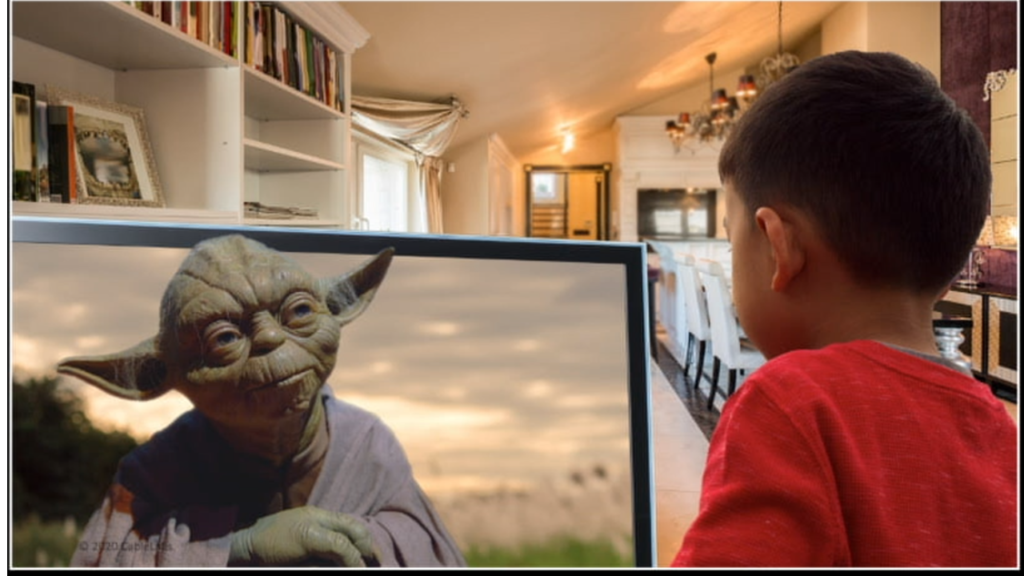
The pandemic has accelerated the adoption of video communication technologies for interpersonal communications and entertainment at an unexpected rate. The idea of going to a screen in the home rather than doing something in-person has now been forced into day-to-day life for all generations and across all public sectors. This is a major shift in consumer behavior in an incredibly short amount of time.

When the threat of the pandemic is under control, most location-based experiences will revert to a normal routine: sports stadiums and airports will fill up, schools and office personnel will return, and concerts will have fans falling over each other in the front rows again. The difference, though, will be in the option of an alternative virtualized experience and the number of people that will opt for it. With ever-improving displays, compelling applications, and better network performance, many people may continue to work, learn, and play at home.

This consumer trend is not new. The great majority of football fans watch televised games even though going to the stadium is an available option: the high production value, amazing displays, rich sound, and avoidance of lines, crowds, and costly tickets makes staying home a compelling alternative. The pandemic has put movie theaters into a similar situation, and studios are being forced to re-visit how best to get new content to consumers without destroying the theater ecosystem in the process. For consumers to choose a private home experience over these location-based entertainment venues is a testament to how far media production, displays, and network technology has come over the last generation, and it’s only getting better.

Virtual Reality (VR) and Augmented Reality (AR) displays have come into market, and the experience of viewing an environment from a flexible viewpoint rather than one pre-determined camera position – known as “six degrees of freedom” or 6DoF – has a solid foothold mostly in the game industry. Although the applications outside of gaming are limited, developers are learning what works best, and gamers have become comfortable with spatial content and what can be done with it. A popular argument for 6DoF applications is that they’re a stepping-stone until better, more user-friendly spatial solutions find mass-consumer adoption.

Immersive displays using light field or holographic technology are no longer sci-fi and the ability to view volumetric spatial media, without a headset, is now available. Live action light field capture technology has been around for about a decade, but there’s never been a commercially available display technology that allows viewers to experience the changing parallax of the media without a headset. Up until now, the massive size of the media could barely run on local machines, and the idea of distributing it over the network was out of the question. Even if there was a display that could project the light field content, there was no way to get it to consumers unless petabyte-sized files could be downloaded and run locally. These limitations are on the verge of being overcome: early displays are out of the protype stage and showing promise, compression standards and network solutions are in development, and early use cases are paving a pathway to market.

However, some  challenges are surfacing for seemingly simple productions.

Imagine how a simple subject of a talking-head newscaster is seen on a standard display. When a newscaster speaks to the audience, they look directly into the camera, and the audience sees the newscaster looking directly at them. This single television view gives the same image to a viewer anywhere in the room.

With holographic displays, this is not the case. A viewer on the right side of a couch will see one side of the newscaster, and a viewer on the left will see the other side. This might seem like a trivial difference at first, but in terms of production considerations, this raises a series of questions. How will viewers react to sitting off-center from the newscaster’s gaze? If there are issues with this viewing experience, what can be done about it? How should multiple viewers in the room be handled? Should a multi-view function be designed that can be turned on and off?

If viewing positions can be identified in the viewing area, a new level of immersion will become possible, especially for gaming experiences. Imagine a smart character that looks directly at one player to say something, then turns to look at another player to say something else to that player. Or, imagine a magic scroll that hides the message from one player but another player in the room can see it. Game techniques like this have been touched on with headsets, but with light field displays, a new level of immersion is introduced that creatives are very excited about.

If consumers embrace holographic displays for improved telepresence, a critical development will come from better eye-to-eye contact. Currently, video telepresence is limited to a single camera view that’s slightly offset from the screen. Today, complex image processing software is required to correct the offset eye-gaze, but light field capture would provide the needed data to engineer one-to-one, one-to-many, and many-to-many social gatherings with more natural eye contact.

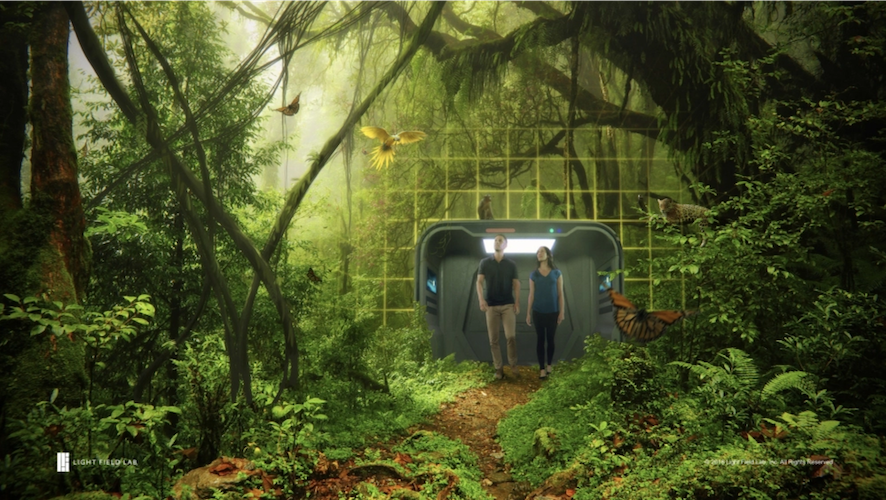
As display, capture, and network technologies improve, the future is ripe for a holographic media ecosystem. What does a holographic experience in the home and office look like in ten years and beyond? Is there a holodeck in sight? The Immersive Digital Experiences Alliance (IDEA) was founded with leaders in this ecosystem to imagine what this future will be and to work towards realizing it.

Link Enlarge

IDEA Videos from SMPTE

Jessy George November 23, 2020 Featured, News 0

Did you miss IDEA at SMPTE 2020? No worries, IDEA’s SMPTE Videos are now available here on our site!


Visit URL: White Papers

Download: IDEA White Papers

Jessy George September 30, 2020 Featured, News 0

The remarkable progress in computer graphics, xR content and volumetric image capture has led to a range of file formats for the interchange of 3D scene descriptions and image assets.  Some examples include Filmbox (FBX), Alembic (ABC), Universal Scene Description (USD), GL Transmission Format (glTF), and the Immersive Technology Media Format (ITMF) proposed by the Immersive Digital Experiences Alliance (IDEA)

Visit URL: New Release: ITMF Version 1.0

New Release: ITMF Version 1.0

Jessy George September 30, 2020 Featured, News 0

The first version of the ITMF suite of specifications, designated version 0.9, was released for public comment by Immersive Digital Experiences Alliance (IDEA) on October 9, 2019.  On September 28, 2020, IDEA released the updated Version 1.0 of three specification documents:  The ITMF Scene Graph Specification, ITMF Data Encoding Specification and ITMF Container Specification.

Download

Executive interview: Pete Ludé, IDEA

Jessy George December 6, 2019 Featured, News 0

Light field is seen as the cutting edge of immersive tech and a new industry organisation is looking to standardise the technology. James Pearce speaks to IDEA president Pete Ludé about what light fields bring to VR.


  • 1
  • 2
  • 3

JOIN THE ALLIANCE

The Immersive Digital Experiences Alliance (IDEA) is a non-profit trade alliance working towards developing a family of royalty-free technical specifications that define interoperable interfaces and exchange formats to support the end-to-end conveyance of immersive volumetric and/or light field media.

ADMINISTRATOR

Jessy George
TJL Consulting, Inc.
PO BOX 1925
Bothell, WA 98041 US
+1 425 492 1763
  • Home
  • About
  • Join
  • News
  • Contact

copyright 2019 Immersive Digital Experiences Alliance

Top